Milwaukee’s weather is tough on outdoor surfaces. Freeze-thaw cycles, snow, and de-icing salts can shorten the life of a poorly installed patio or walkway. The good news: when concrete is designed and poured the right way, it’s one of the most durable, cost-effective upgrades you can make for curb appeal and everyday function.
In this guide, we’ll break down what homeowners should know before installing or replacing a concrete patio or concrete walkway in Milwaukee, WI —from prep work and drainage to finishes, sealing, and what to ask a contractor.
Why Concrete Patios & Walkways Are a Smart Choice in Milwaukee
Concrete is popular in southeastern Wisconsin for one simple reason: it can handle the seasons when installed correctly. Compared to many other materials, concrete offers:
- Strength and stability for heavy foot traffic and outdoor furniture
- Cleaner snow removal(no shifting pieces like some segmented surfaces)
- Design flexibility(broom finish, stamped patterns, color, borders)
- Lower maintenance than many alternatives over the long run
- Better curb appeal for resale value and everyday enjoyment
Patio vs. Walkway: What Changes in the Installation?
Patios and walkways are both “flatwork,” but they serve different jobs—and that impacts how they should be planned.
Concrete Patios
A patio is a living space. It needs to feel comfortable underfoot, look great, and support furniture, grills, and gatherings. Patios usually benefit from:
- Thoughtful layout and shape (entertaining zones, steps, door clearance)
- Finishes that match the home (decorative or stamped concrete options)
- Drainage planning so water flows away from the foundation
Concrete Walkways
Walkways are about safe, reliable movement—front entrances, side yards, backyard paths, and connections to patios/driveways. Walkways typically prioritize:
- Slip-resistant texture(broom finish is a Milwaukee favorite)
- Proper slope to prevent pooling and icy spots
- Clean edges and control joints to reduce random cracking
The Milwaukee Checklist: What Makes Concrete Last Through Winter
Concrete durability isn’t only about the concrete mix—it’s about the entire system underneath and around it. Here are the biggest factors that separate long-lasting work from early cracking and heaving.
1) Base Prep Matters More Than Most People Think
A solid base helps your slab stay level through seasonal movement. Quality patio and walkway installation typically includes:
- Removal of unstable material
- Proper grading
- Compacted base (often crushed stone) for stability and drainage
- Edge support where needed
Skipping or rushing this step is one of the most common reasons concrete settles unevenly or cracks faster than expected.
2) Drainage and Slope: Small Details, Big Results
In Milwaukee, water is a year-round issue—rain in warmer months, melting snow and ice in winter. Good concrete flatwork should be designed so water:
- Moves away from your foundation
- Doesn’t pool in low spots (a common cause of icy hazards)
- Doesn’t wash out surrounding soil or landscaping
Drainage is one of the most “invisible” parts of a great job—until it’s wrong. Then you feel it every winter.
3) Control Joints Help Prevent Random Cracking
Concrete naturally cracks over time. The goal is to control where it cracks so it stays clean and predictable. Contractors do this with control joints(cut lines) and proper spacing—especially important on walkways and larger patio slabs.
4) Finish Choice Impacts Safety and Maintenance
Milwaukee homeowners often choose finishes based on both appearance and winter traction:
- Broom finish: classic, slip-resistant, great for walkways
- Light stamp patterns: adds style while still offering traction
- Decorative borders: upgrade the look without overcomplicating maintenance
- Exposed aggregate: textured, durable, and visually interesting
Design Ideas for Concrete Patios in Milwaukee, WI
A new patio is one of the fastest ways to make your yard feel “finished.” Here are popular design directions Milwaukee homeowners love:
Stamped Concrete Patio That Looks Like Stone (Without the Hassle)
Stamped concrete can mimic stone, brick, or tile patterns while staying a single, solid surface—helpful for snow clearing and long-term stability.
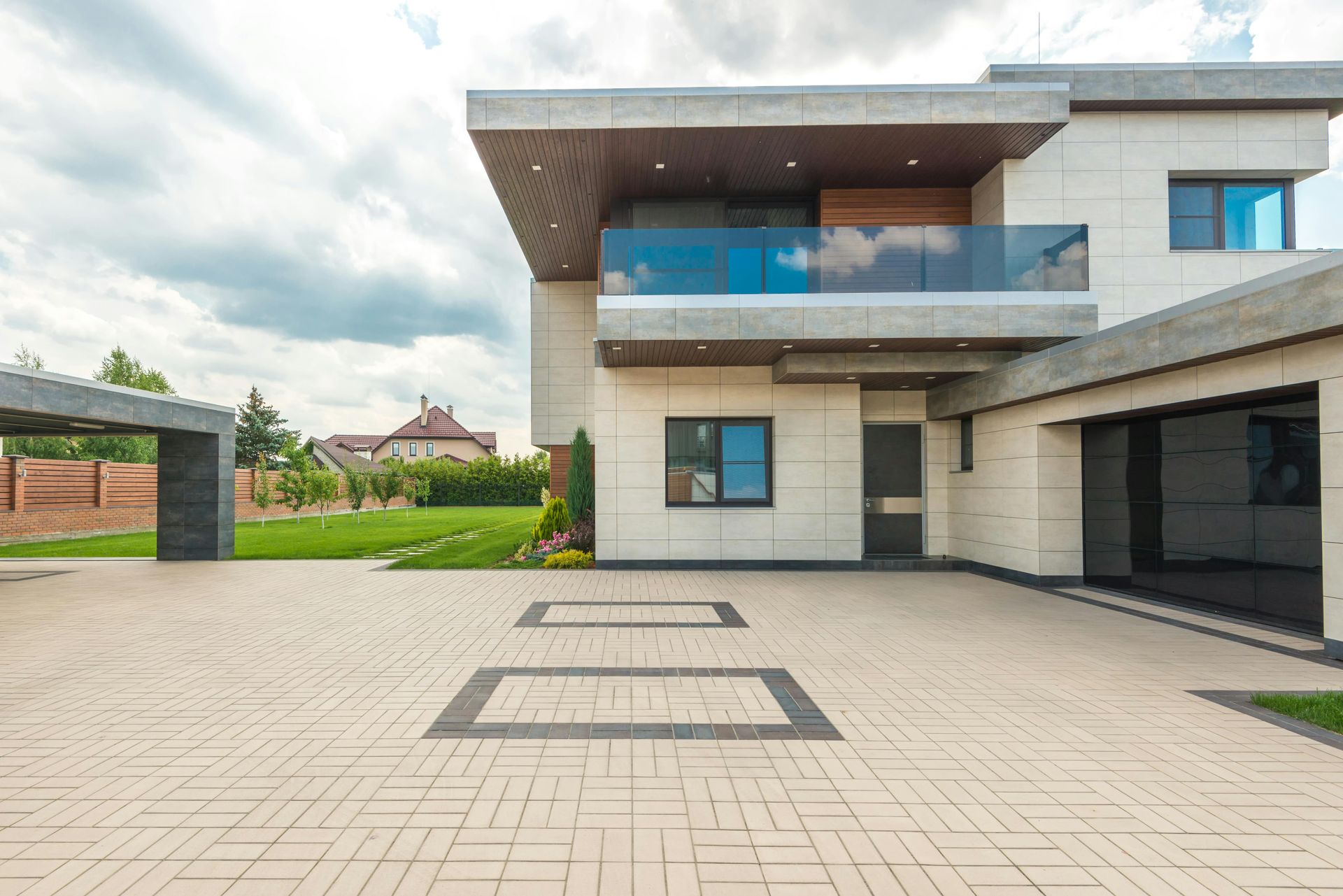
Modern Smooth Patio with a Decorative Border
A clean patio with a contrasting border offers a high-end look while keeping the main surface easy to maintain and reseal.
Wraparound Patio + Walkway Connection
Many yards function better when the patio connects to a walkway or side gate path. Planning both together often improves flow and creates a more cohesive finished look.
Design Ideas for Concrete Walkways in Milwaukee, WI
Walkways can be simple—or a major curb appeal upgrade. Consider:
- Widening the front walk for easier entry and better balance in winter
- Curved walkway layouts to soften the look of the landscape
- Step transitions if the grade changes (safer than steep slopes)
- Landing pads near doors and gates for traction and stability
Sealing and Maintenance: How to Protect Your Patio or Walkway
Even great concrete benefits from the right maintenance—especially in Milwaukee. A few smart habits can extend the life of your patio and walkways:
- Seal when recommended(especially for decorative or stamped concrete)
- Use gentle de-icing practices and avoid harsh chemicals when possible
- Keep edges clear so water doesn’t undermine the slab over time
- Clean seasonally to reduce staining and surface wear
If your concrete is already older, a contractor can tell you whether resealing, resurfacing, or replacement makes the most sense.
Common Patio & Walkway Problems We See in Milwaukee
If you’re searching for concrete patio and walkways in Milwaukee, there’s a good chance you’re dealing with one of these issues:
- Uneven slabs from settling or base failure
- Trip hazards on sidewalks and front steps
- Spalling or flaking from moisture + freeze-thaw + salt
- Widening cracks that collect water and worsen in winter
- Poor drainage creating puddles that refreeze
The fix depends on the cause—sometimes repair is enough, and sometimes replacement is the smarter long-term investment.
How to Choose a Concrete Contractor in Milwaukee for Patios & Walkways
Not all concrete work is equal. Before hiring, ask questions that reveal the contractor’s process and attention to Milwaukee-specific conditions:
- How will you prep and compact the base?
- How will you handle slope and drainage?
- Where will you place control joints?
- What finish do you recommend for traction?
- Will you provide guidance on sealing and maintenance?
A quality contractor should explain the “why,” not just the “what.”
Ready for a New Concrete Patio or Walkway in Milwaukee, WI?
If you want concrete flatwork that looks great and holds up through Wisconsin seasons, M.H. Concrete is here to help. We handle planning, prep, pouring, finishing, and guidance for long-term care—so you get results that last.
Call M.H. Concrete:
414-424-3507
Request an estimate:
Contact Us
Explore services:
Concrete Services in Milwaukee, WI
FAQ: Concrete Patios & Walkways in Milwaukee, WI
Is concrete a good choice for Milwaukee winters?
Yes—when the base is properly prepared, the slab is finished correctly, drainage is handled, and the surface is maintained (including sealing when recommended). Milwaukee’s freeze-thaw cycles make installation quality especially important.
What is the best finish for a concrete walkway in Milwaukee?
A broom finish is a top choice because it improves traction in wet and icy conditions while staying easy to maintain and shovel in winter.
Should I seal my concrete patio?
Many patios benefit from sealing, especially decorative or stamped surfaces. Sealing can help reduce moisture absorption, staining, and surface wear.
Can a patio and walkway be poured together?
Often, yes. Pouring them as a coordinated project can improve the flow of your outdoor space and create a cohesive design. A contractor can recommend the best approach based on layout, grade, and timing.